Parse the input
The verifier interprets international numbers directly and can use a two-letter country context for national-format input.
Validate phone-number structure against country-specific numbering metadata, normalize supported numbers to E.164, and inspect country, line-type and carrier metadata where available.
Example interface only. Actual metadata depends on the submitted number.
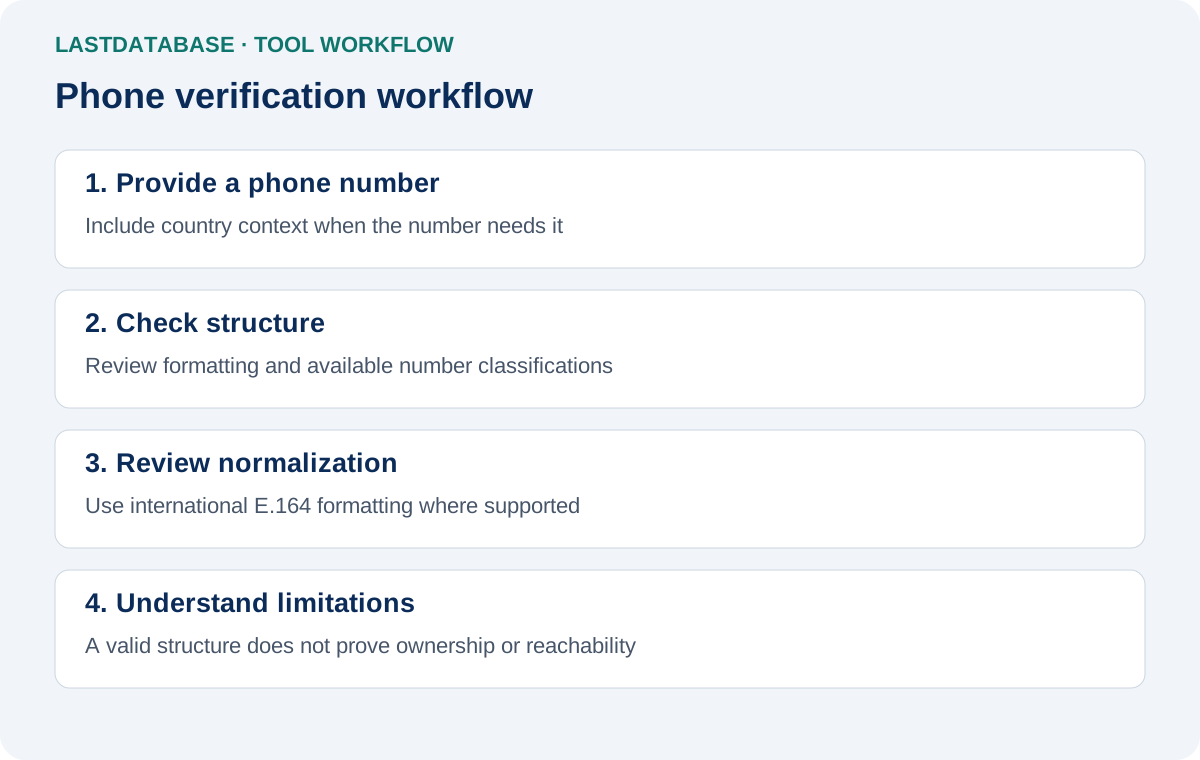
The verifier evaluates the submitted number against phone-number parsing and numbering-plan metadata. It does not place a call or send a message to the number.
The verifier interprets international numbers directly and can use a two-letter country context for national-format input.
The number is evaluated for technical possibility and validity against available numbering-plan metadata.
Supported numbers can be returned in canonical international E.164 format for consistent storage and processing.
Results can include country code, line type and carrier metadata when those signals are available for the number.
Phone verification is a technical assessment. The output helps standardize phone data and identify numbers that do not conform to available numbering-plan rules.
Read our methodology →Checks whether the parsed number is technically valid under available numbering-plan metadata.
Produces standardized international formatting when the submitted number can be normalized.
Returns the detected country or region context when available from the parsed number.
Can classify supported numbers by available line-type metadata, such as mobile or fixed-line categories.
Carrier information is displayed only when the underlying metadata provides it.
Process up to 10,000 unique numbers in a browser-orchestrated run and export the resulting table as CSV.
Enter a phone number and optional country context to inspect normalization, technical validity and available metadata.
Paste numbers or upload a simple CSV/TXT list. The current browser workflow accepts up to 10,000 unique numbers per run.
A technically valid phone number is not the same as a confirmed reachable, assigned, consented or compliance-cleared contact.
It does not confirm that the number is currently reachable.
It does not confirm current assignment or ownership by a specific person.
It does not establish marketing consent or permission to contact the number.
It does not by itself establish DNC, DND or other regulatory clearance.
Standardize phone formats before importing or maintaining contact records.
Identify malformed or technically invalid phone numbers in prospecting datasets.
Convert supported numbers into consistent E.164 formatting across countries.
Add available country, number-type and carrier metadata to downstream workflows.
Completed phone verification operations use the same LastDatabase verification-credit system as supported email verification. Your customer workspace displays the current balance before you run verification.
Key details about phone validation, normalization, metadata and bulk processing.
It parses the submitted number, evaluates technical possibility and validity against available numbering-plan metadata, and returns normalization and metadata where available.
No. The current verifier does not place a call or send a message, and it does not claim live reachability.
E.164 is an international phone-number representation that uses a country calling code and standardized numeric format. Supported results can be normalized into this form.
Yes. International-format numbers can be parsed directly. National-format input can use a two-letter country context.
Carrier metadata is returned only when it is available from the underlying phone metadata. It should not be interpreted as proof of current assignment.
Yes. The current customer workflow can process up to 10,000 unique numbers per browser run using chunks of 25 numbers.
The current workflow supports pasted input and simple CSV or TXT phone-number lists. It is intended for straightforward delimiter-separated number input rather than arbitrary multi-column CSV mapping.
No. Technical phone validity does not establish consent, ownership, DNC/DND clearance or permission for a particular communication.
No. Supported email and phone verification operations use the shared LastDatabase verification-credit balance.
Open the LastDatabase Phone Verifier for single-number checks or bulk phone-list processing.