Reach Philippine Consumers with Verified Mobile Data
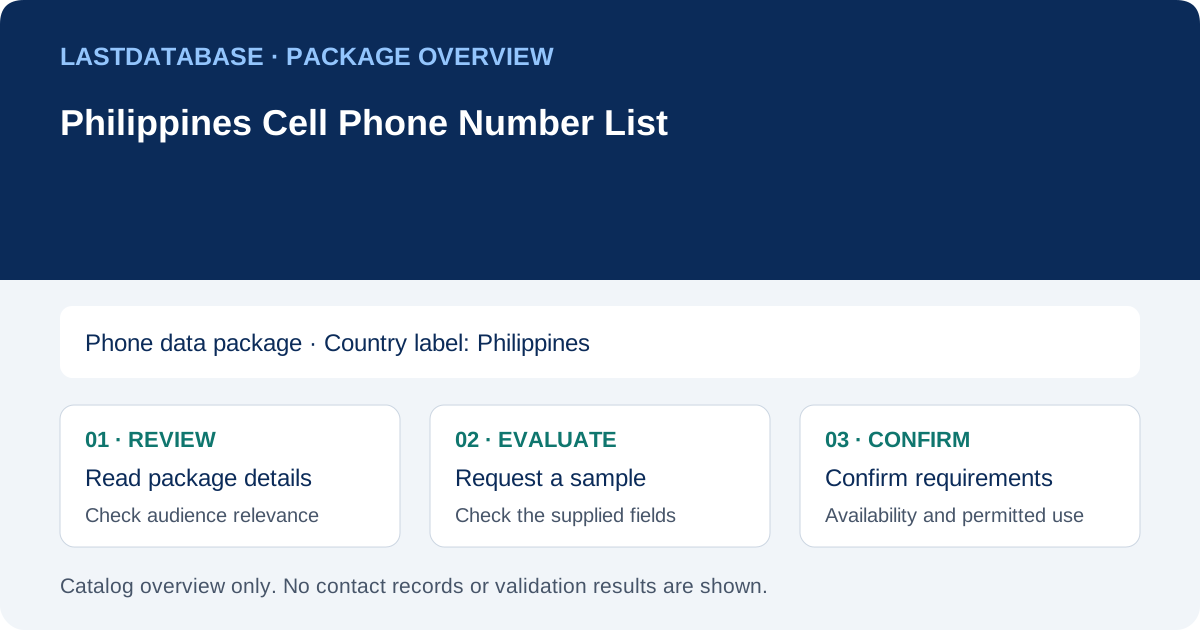
The Philippines is a mobile-first market where cellular connectivity outpaces the total population. The Philippines Cell Phone Number List provides 1,000,000 mobile records designed to help businesses build targeted SMS campaigns, outbound telemarketing workflows, and regional consumer outreach.
By starting with 99%+ JIT verified data, organizations can minimize wasted outreach. This package guarantees less than 1% invalid records, ensuring your sales and marketing teams focus on active Philippine numbers. Trusted by 20,000+ customers worldwide, LastDatabase delivers actionable contact data ready for immediate integration into your CRM.
The Role of Mobile Outreach in the Philippine Market
Philippine consumers rely heavily on smartphones for retail, banking, communication, and daily services. With over 137 million cellular connections active across the archipelago, SMS and direct mobile communication remain among the most reliable ways to reach audiences, particularly for time-sensitive alerts, payday (kinsenas and katapusan) promotions, and localized offers.
While internet connectivity can vary between urban centers and provincial areas, basic cellular networks reach nearly every municipality. This makes SMS marketing a highly effective channel. Additionally, many Philippine consumers use their mobile numbers to register for messaging apps. Businesses often coordinate SMS lists with Philippines WhatsApp Number Data to create a multi-channel conversational strategy.
Regional Targeting: From Metro Manila to Mindanao
The Philippines is geographically diverse, and a nationwide campaign is rarely the most efficient approach. Segmenting your mobile list by region, city, or island group allows you to match your service coverage with the right audience.
Metro Manila (NCR) and High-Density Urban Markets
Consumers in Quezon City, Makati, Manila, and Taguig expect fast delivery, digital convenience, and competitive pricing. Mobile campaigns targeting NCR are ideal for e-commerce flash sales, real estate developments, financial services, and on-demand delivery apps.
Calabarzon and Central Luzon
Provinces like Cavite, Laguna, Pampanga, and Bulacan represent rapidly expanding residential and industrial hubs. Outreach here supports regional retail expansions, automotive sales, home services, and localized recruitment.
Visayas and Mindanao Hubs
Cebu City, Iloilo, and Davao City are major economic centers outside Luzon. When launching campaigns in these regions, ensure your logistics, branch locations, and customer service teams can support local demand. Avoid sending Metro Manila-specific promotions to audiences in Visayas or Mindanao without confirmed local infrastructure.
Industry-Specific Applications for Philippine Mobile Records
A verified mobile list supports multiple business objectives across various sectors, provided the campaign delivers clear value and respects consumer preferences.
Retail and E-commerce
E-commerce platforms and brick-and-mortar retailers use mobile data to drive immediate foot traffic or online sales. Flash sales tied to local paydays (the 15th and 30th of the month) perform exceptionally well via SMS due to the high open rates of text messaging.
Real Estate and Property Development
Philippine real estate developers rely on phone outreach to invite prospects to property viewings, open houses, and preselling events. Segmenting by region ensures that a condominium project in Taguig is promoted to nearby urban professionals rather than distant provincial residents.
Banking, Finance, and Insurance
Financial institutions utilize mobile lists for credit card acquisition, loan promotions, and insurance policy updates. Because financial services require a high degree of trust, outreach must be highly professional and focused on providing clear consumer value.
Multi-Channel Campaign Coordination
Mobile data rarely works in isolation. Connecting phone outreach with email campaigns creates a cohesive customer journey. For example, a business might send an initial product announcement via the Philippines Consumer Email List, followed by an SMS reminder for an upcoming deadline.
Data Quality and Just-In-Time Verification
Stale data increases campaign costs and frustrates sales teams. LastDatabase applies Just-in-Time (JIT) verification before delivery, ensuring the records you purchase are checked against live network signals.
This process confirms the +63 number format and network validity, resulting in a package that is 99%+ JIT verified. By maintaining a standard of less than 1% invalid records, businesses can trust their foundational contact lists. The data-quality guarantee applies strictly when scoped to the supplied data.
CRM Integration and Data Workflow
Managing 1,000,000 records requires organized data handling. LastDatabase supports seamless workflows for modern sales teams operating in the Philippines and abroad.
Buyers can export selected purchased data directly via CSV or integrate it with supported platforms like HubSpot, Salesforce, Zoho CRM, and Connect CRM. The platform allows for precise field mapping, ensuring that geographic data, phone numbers, and categories align with your internal system architecture. Once the data transfer is complete, teams can disconnect CRM access to maintain strict security boundaries.
For teams managing multiple international territories, exploring other Phone Lists can help standardize formatting and upload procedures across the entire organization.
Navigating Philippine Data Privacy and Telemarketing Rules
Purchasing contact data is only the first step; executing a lawful campaign is the buyer's responsibility. The Philippines enforces strict regulations regarding consumer data and electronic communications.
The Data Privacy Act of 2012 (Republic Act No. 10173)
Overseen by the National Privacy Commission (NPC), the Data Privacy Act governs the collection, processing, and storage of personal information. Marketers must establish a lawful basis for processing, provide transparent privacy notices, and respect consumer rights, including the right to object to direct marketing.
NTC Guidelines on Broadcast Messaging
The National Telecommunications Commission (NTC) regulates SMS and telemarketing. Promotional messages generally require prior consent. Additionally, NTC rules strictly prohibit sending promotional broadcast messages between 9:00 PM and 7:00 AM unless the recipient has explicitly opted into a specific subscription service.
LastDatabase provides Opt-in data and supports automated opt-out processing to help businesses manage their lists responsibly. At the company level, LastDatabase maintains GDPR and CCPA compliant infrastructure. However, buyers targeting the Philippine market must align their specific campaign messaging, timing, and consent mechanisms with local NPC and NTC requirements.
Flexible Pricing and Monthly Access Plans
LastDatabase offers transparent, scalable pricing to suit different campaign sizes and organizational needs. Buyers can choose to pay per lead or subscribe to a monthly access plan.
Pay Per Lead
For highly targeted, one-off campaigns, buyers can select exact records at $0.05 per lead, with a minimum purchase requirement of 500 records.
Monthly Access Plans
For ongoing sales operations, monthly plans provide cost-effective data access. Every plan operates on a 30-day period:
- Free: $0 per month for 50 records.
- Basic: $49 per month for 5,000 records.
- Business: $399 per month for 50,000 records.
- Enterprise: $999 per month for 500,000 records.
Before committing to a larger plan, buyers can evaluate a 50-record free sample to test data formatting, CRM field mapping, and regional accuracy.
Frequently Asked Questions (FAQ)
How many records are in the Philippines Cell Phone Number List?
The package contains 1,000,000 authoritative mobile records. You can filter and select the exact volume you need based on your specific campaign parameters.
What is the accuracy rate of the mobile numbers?
The records are 99%+ JIT verified before delivery, and the package carries a guarantee of less than 1% invalid records.
Can I integrate this data directly into Salesforce or HubSpot?
Yes. LastDatabase supports direct integration with HubSpot, Salesforce, Zoho CRM, and Connect CRM. You can use field mapping to align the data and easily export selected purchased data.
Is there a way to test the data before buying?
Yes. LastDatabase provides a 50-record free sample so you can review the formatting, geographic fields, and CRM compatibility before making a larger purchase.
How does pricing work for Philippine mobile records?
You can pay per lead at $0.05 (minimum 500 records) or choose a monthly plan. The Basic plan offers 5,000 records for $49 every 30 days, while the Business plan provides 50,000 records for $399.
Are these numbers formatted for international dialing?
Yes, standardizing your CRM to accept the +63 country code ensures compatibility with automated dialing systems, SMS gateways, and international telemarketing platforms.
Does this list comply with the Philippine Data Privacy Act?
LastDatabase supplies verified, opt-in data and operates on GDPR and CCPA compliant infrastructure. However, buyers are legally responsible for ensuring their specific outreach complies with the Data Privacy Act of 2012 and NTC telemarketing rules, including honoring opt-outs and restricted calling hours.
Can I filter the list by specific Philippine cities?
Yes, geographic filtering allows you to isolate records for specific areas, such as Metro Manila, Cebu, or Davao, ensuring your campaign reaches a relevant local audience.
What happens if a consumer opts out of my SMS campaign?
You must honor the request immediately. LastDatabase supports automated opt-out processing, but you must also maintain internal suppression lists to prevent future contact in accordance with Philippine privacy laws.
Is it possible to combine this list with email marketing?
Yes. Many businesses coordinate their mobile outreach with the Philippines Email List to build comprehensive, multi-channel campaigns across SMS, voice, and email.